Buy the sprint
Inspect a working product instead of funding discovery.
See moreSee less
Borrower UX, admin tools, servicing math, integrations, audit and deployment gates are already in one inspectable codebase.
A working loan-management platform is available because the original customer path did not close. Buy the product foundation, guided demo and Azure deployment path; bring your brand, vendors and policies.
The customer did not move forward. The platform did. This is a closeout sale for a buyer that wants to diligence a real stack, not a pitch deck.
Inspect a working product instead of funding discovery.
Borrower UX, admin tools, servicing math, integrations, audit and deployment gates are already in one inspectable codebase.
Keep the platform economics with the buyer.
A dedicated license gives the buyer control over roadmap, data, vendors and deployment timing without per-loan platform rent.
Launch planning can start from evidence.
Run sandbox diligence, certify vendors, prove staging and move to Azure production with retained proof.
Buy the codebase and operate it under your brand.
Best fit when a buyer wants roadmap control, Azure control and long-term ownership.
Lock the platform around a channel or territory.
Useful when the buyer wants exclusivity without a full acquisition on day one.
Pair implementation fees with a recurring license.
This can be sold like SaaS while still running as a dedicated buyer environment.
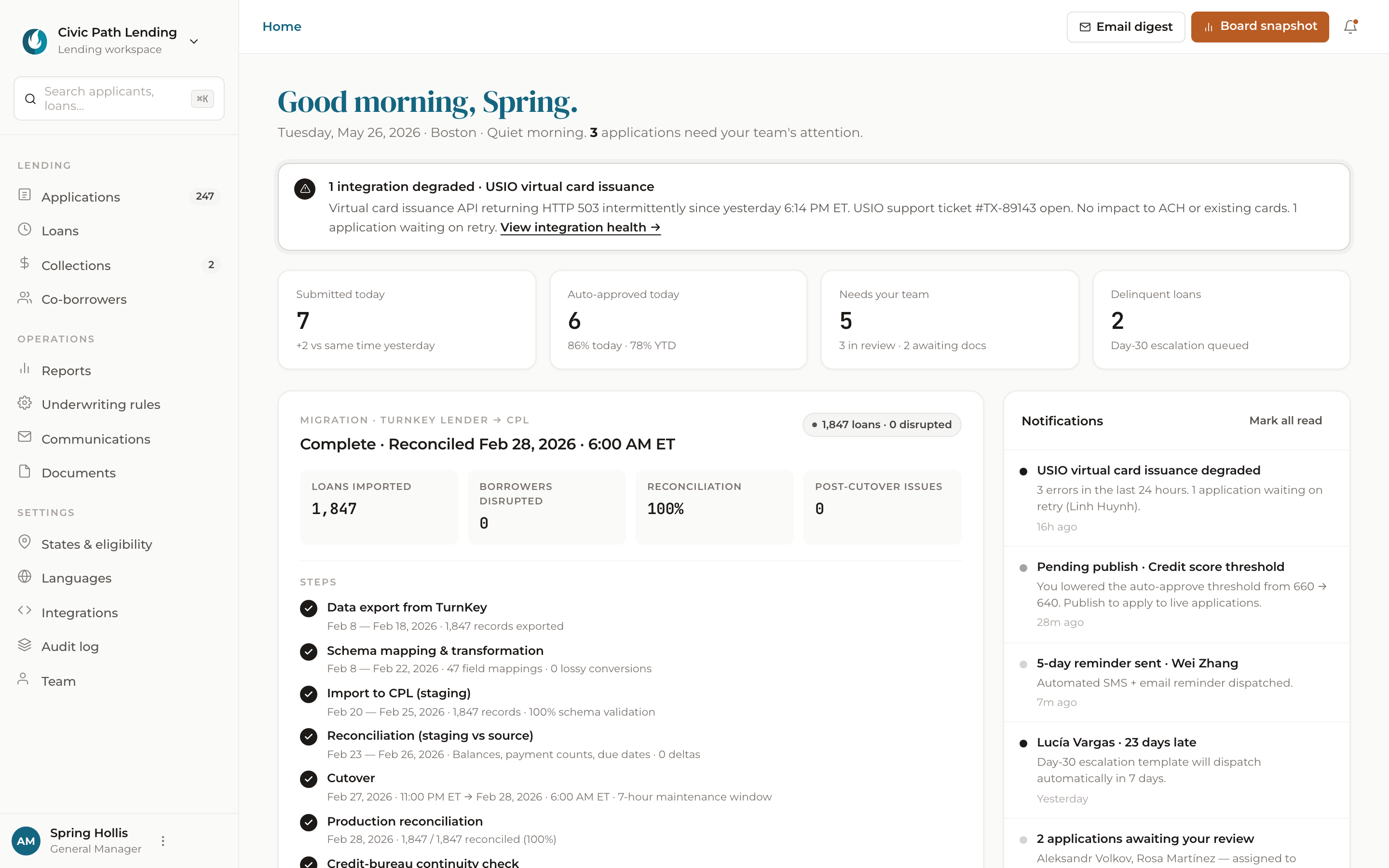
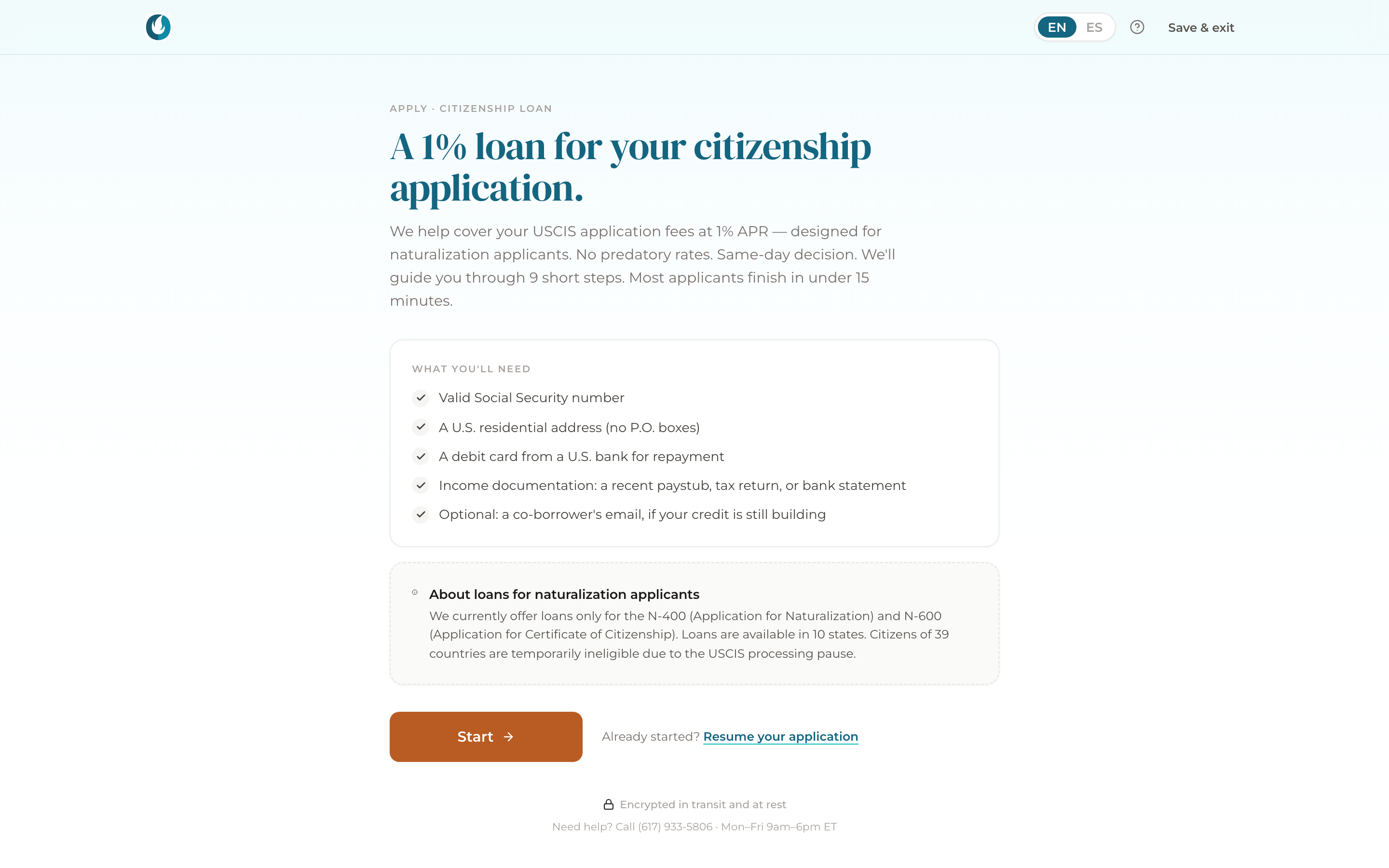
Start with the three surfaces a buyer needs to believe: application, portal and operator console.
 01
01Application intake a buyer can diligence before credentialing and launch.
Open demo →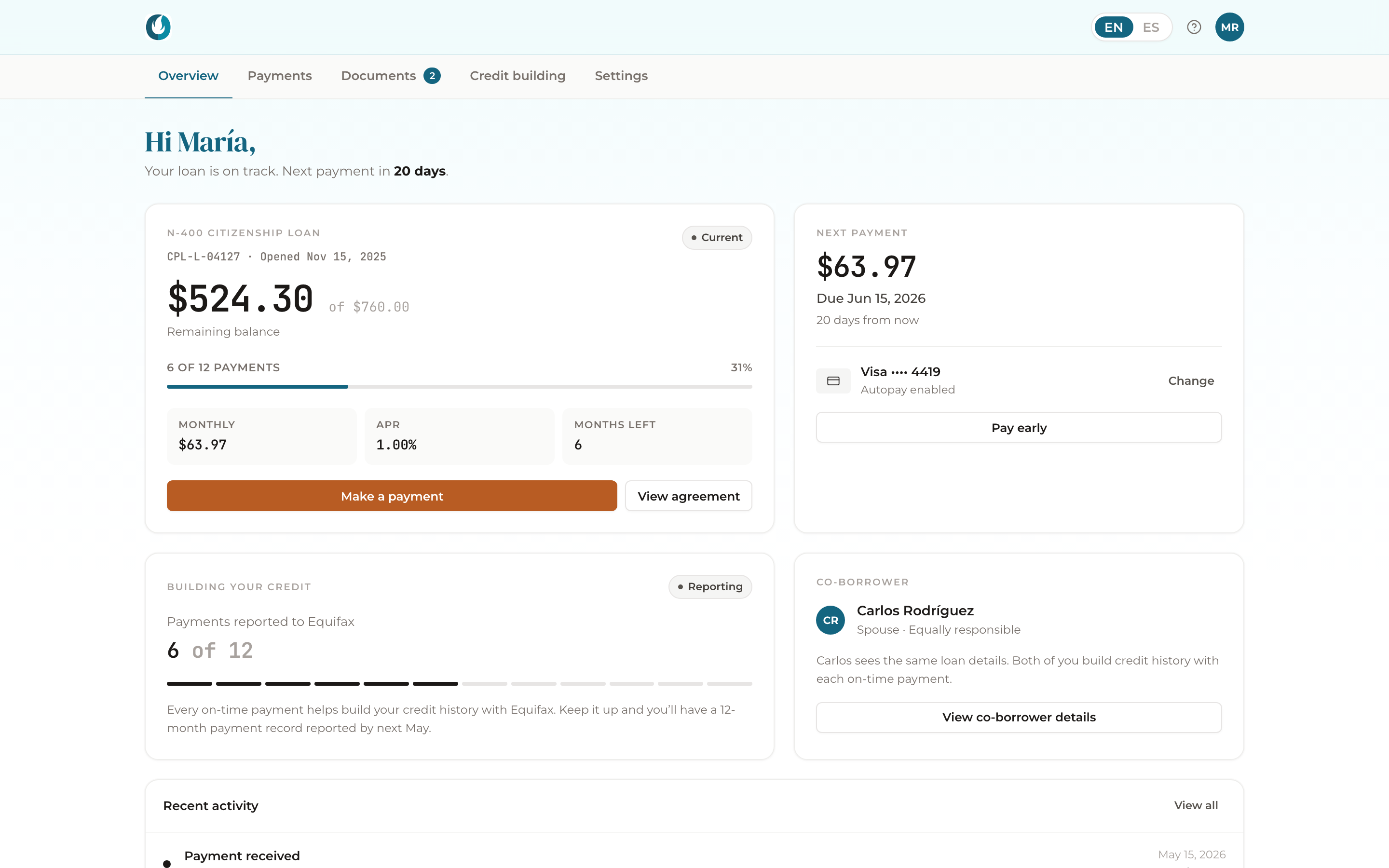 02
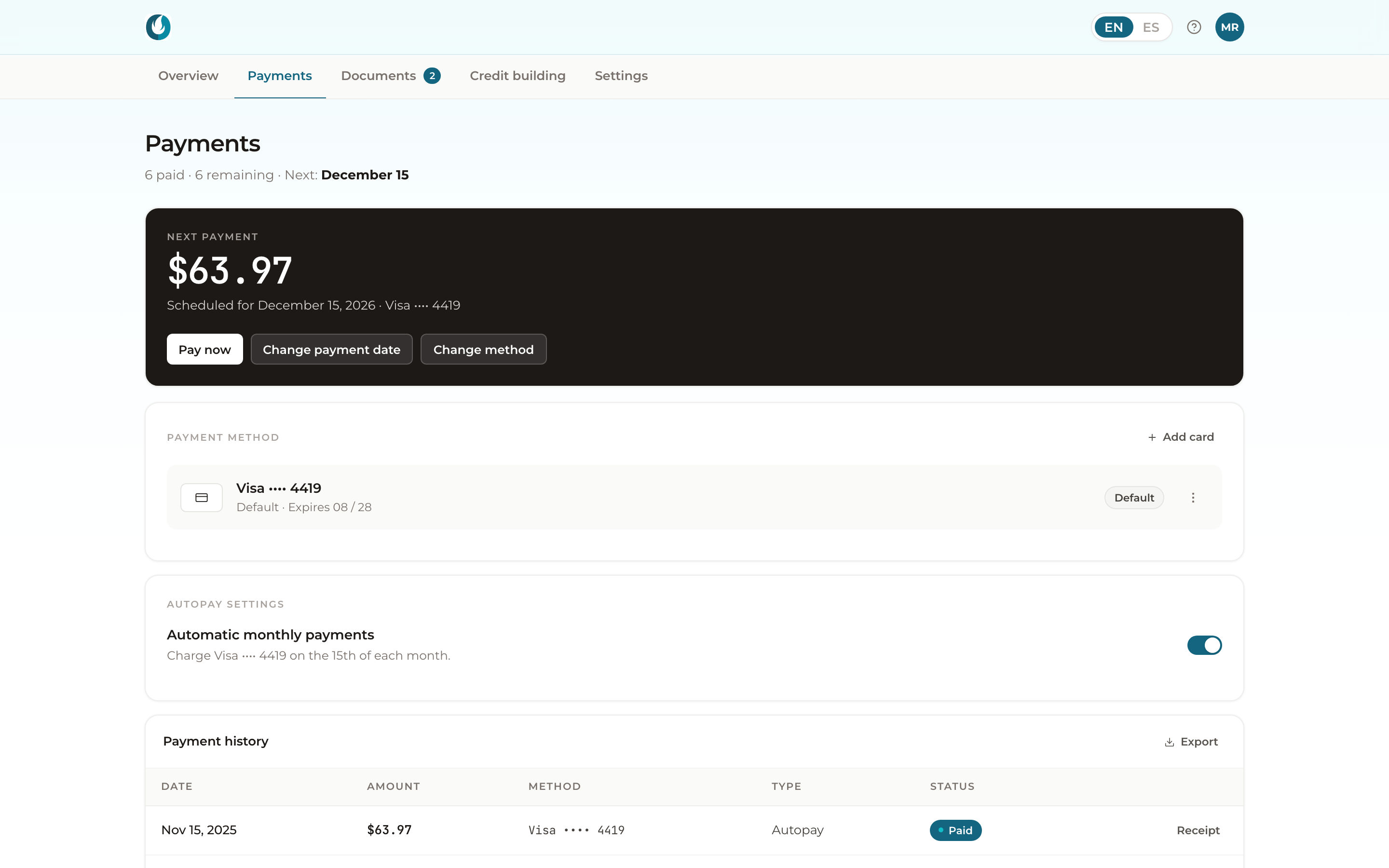
02Borrower portal for payments, documents, statements and credit-building progress.
Open demo →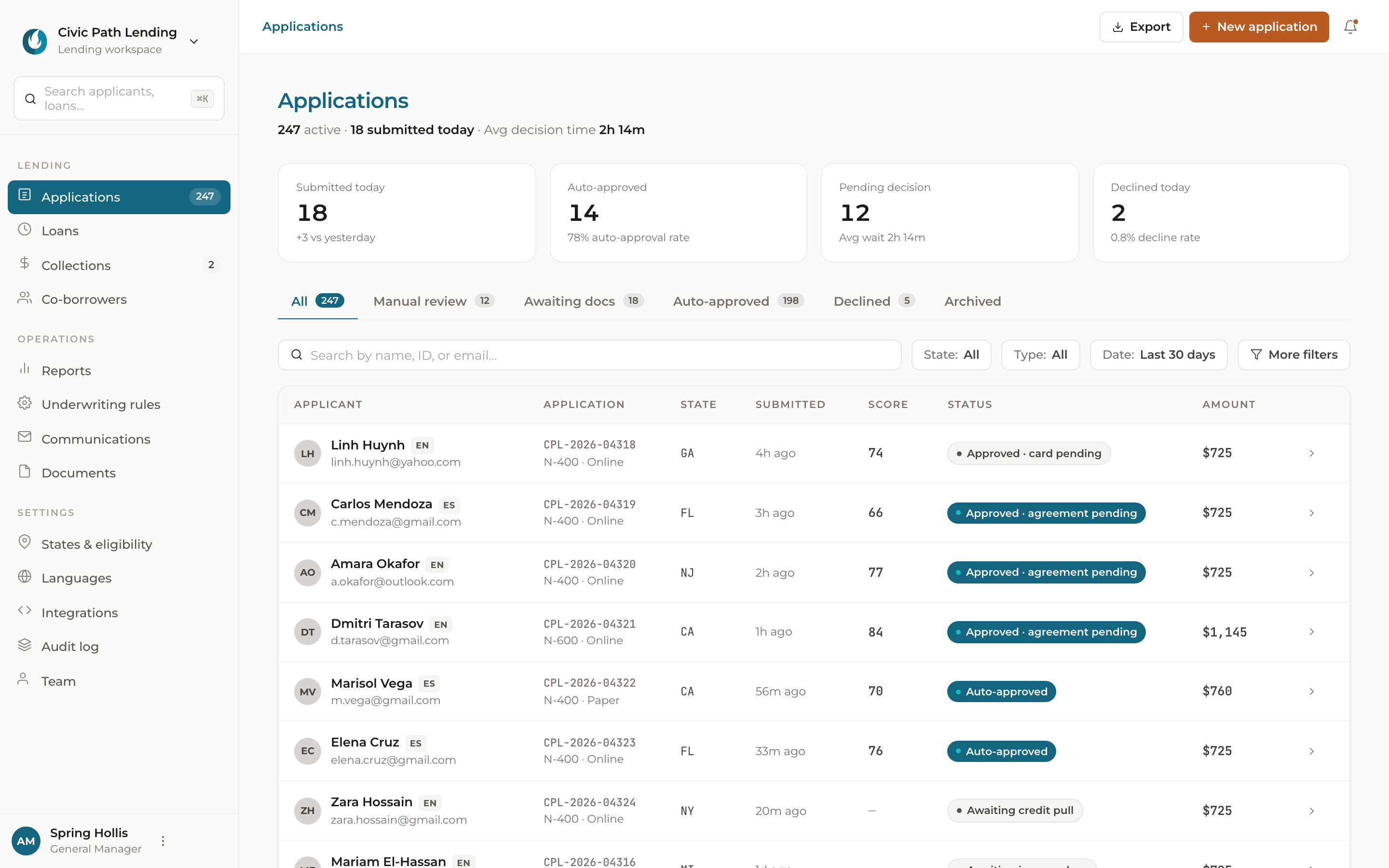 03
03Operator workbench for applications, servicing, rules, reports, integrations and audit.
Open demo →Not a wall of claims — the working surfaces. Scroll the platform, capability by capability.
Borrower application flow from account creation through submission.
Includes identity, phone verification, e-sign consent, income proof, co-borrowers, priced terms and submission evidence.
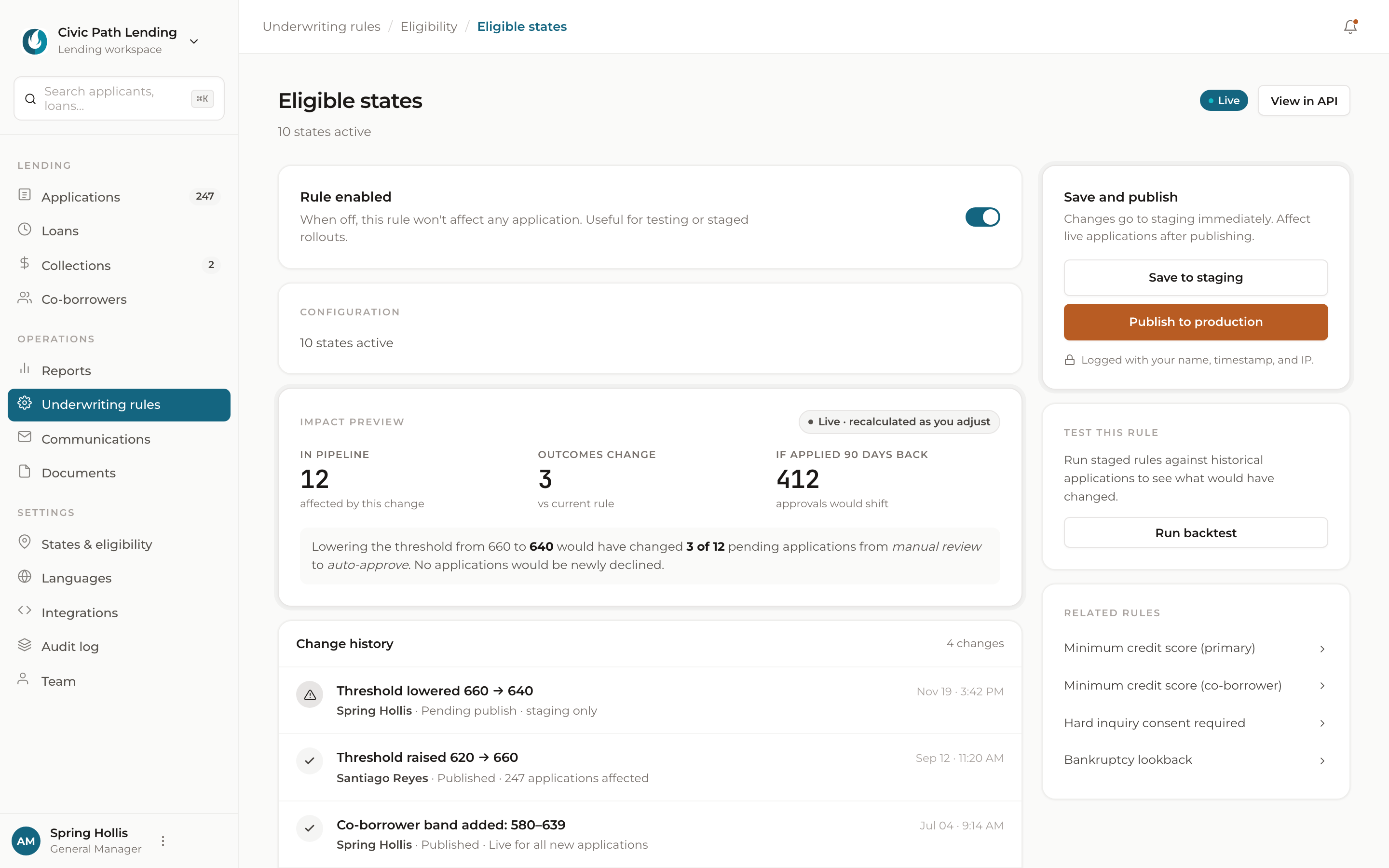
Decision rules are versioned and buyer-adjustable.
Rules can be staged, published and backtested so thresholds change without rebuilding the product shell.
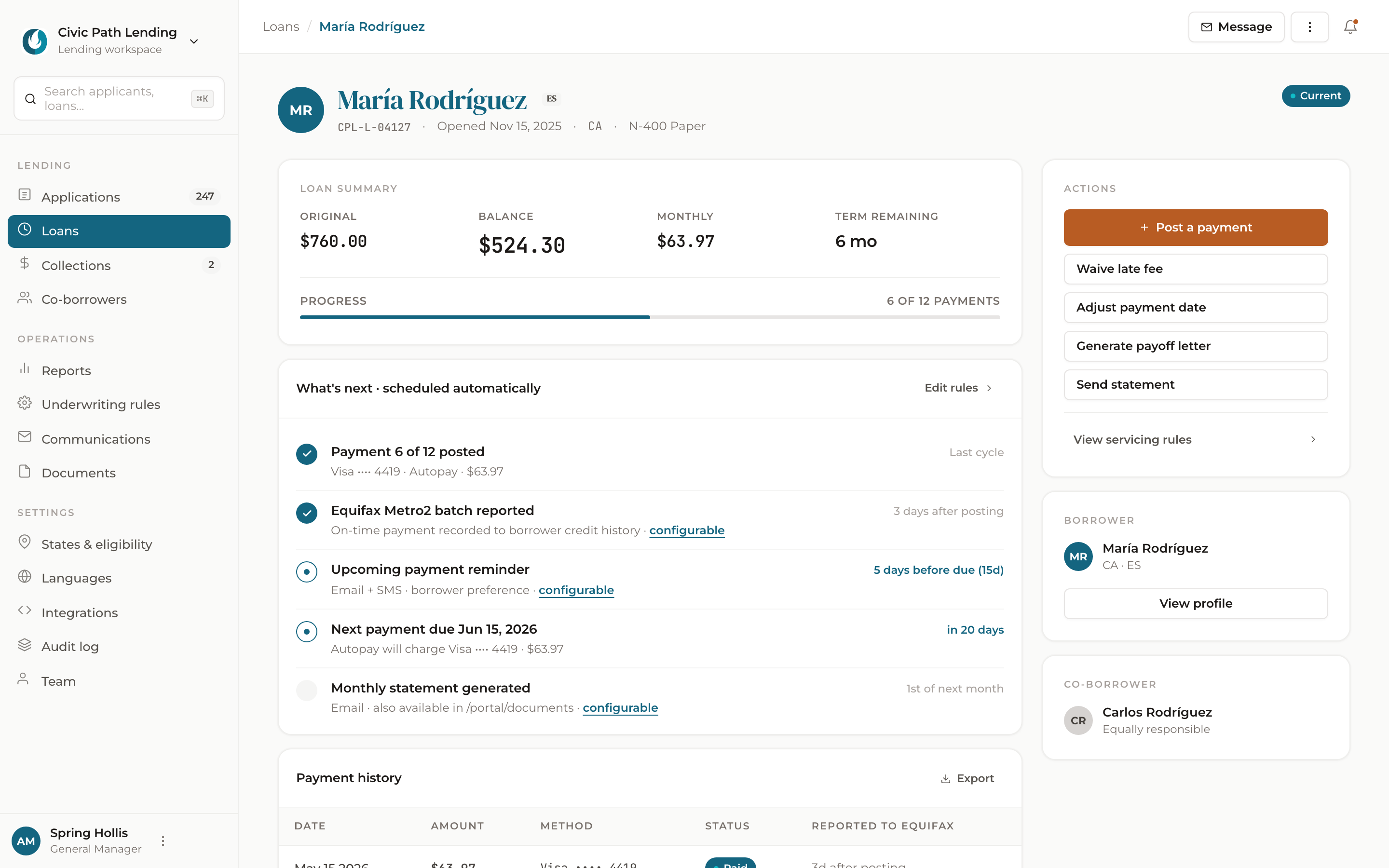
Loan operations are modeled beyond approval.
Amortization, interest accrual, delinquency, late fees, payoff quotes, statements, hardship actions and due-date changes are represented.
Processor paths are separated behind adapters.
Stripe, Plaid and card-issuing flows connect to allocation, refunds, reversals, reconciliation and ledger evidence.
Controlled-card workflows are already shaped.
Virtual-card usage, encrypted card data, webhook evidence and borrower/co-borrower visibility rules are part of the design.
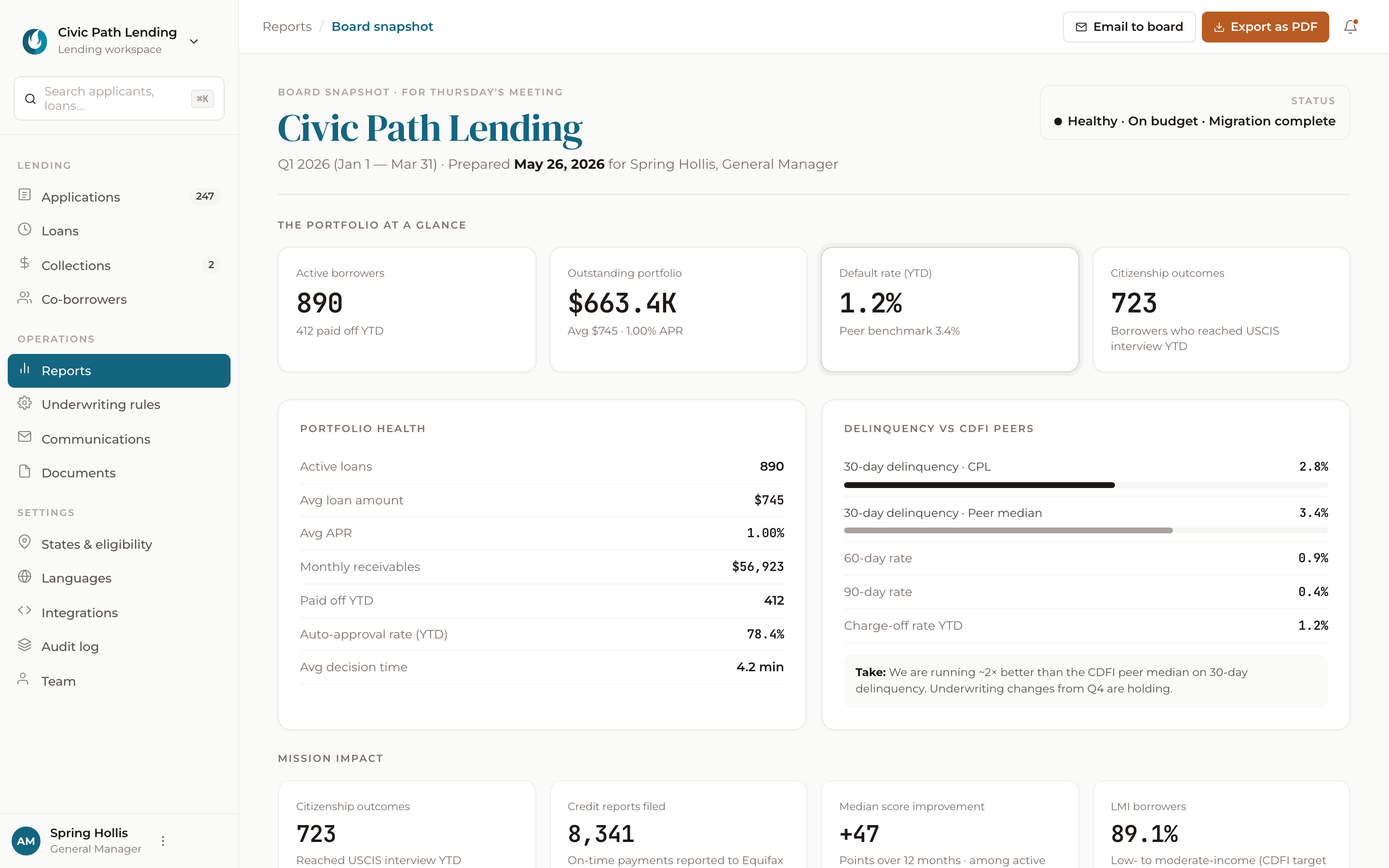
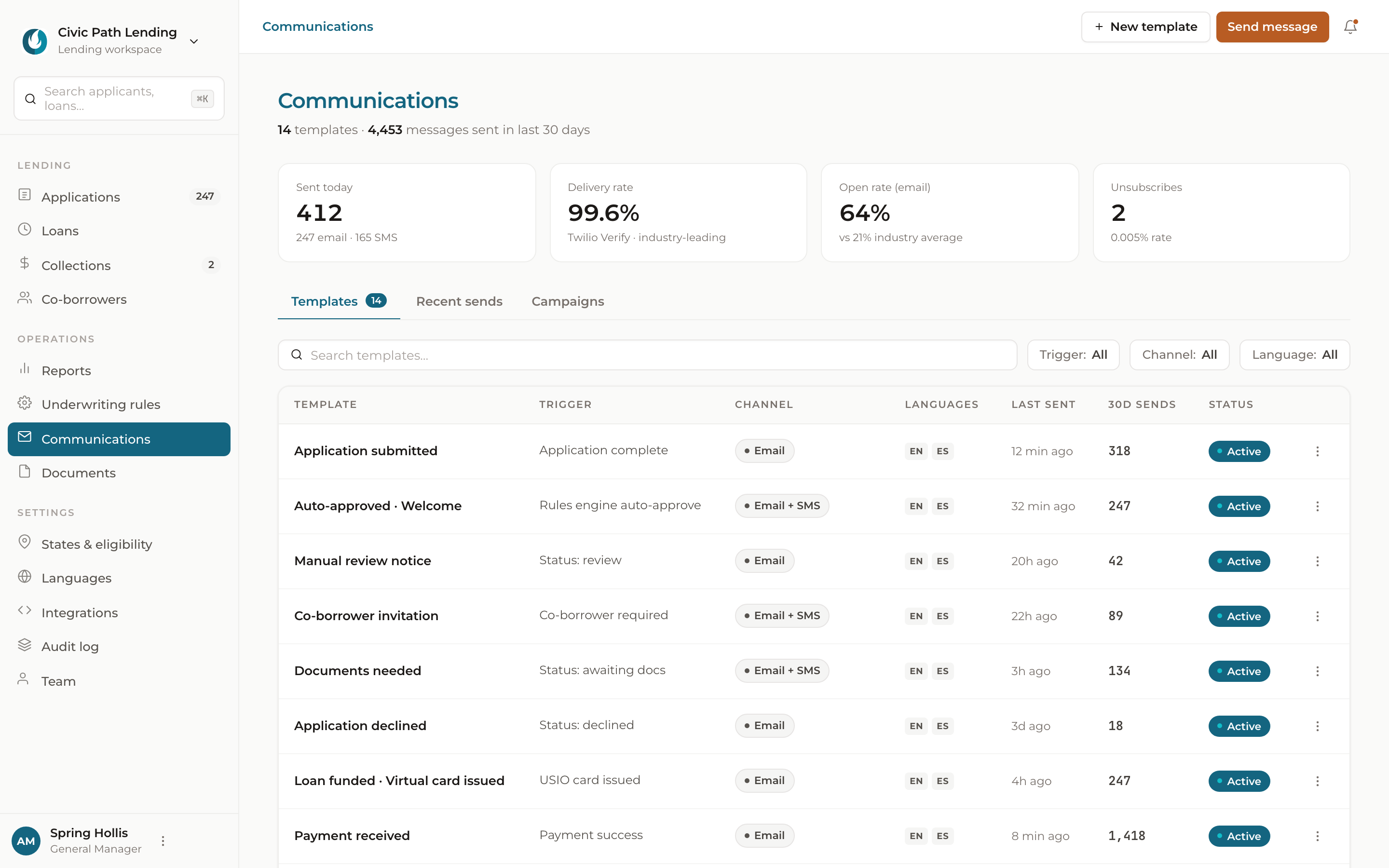
Operator reporting is already in the product.
Board, impact, financial, aging, campaign, CDFI and bureau-reporting surfaces are included for diligence.
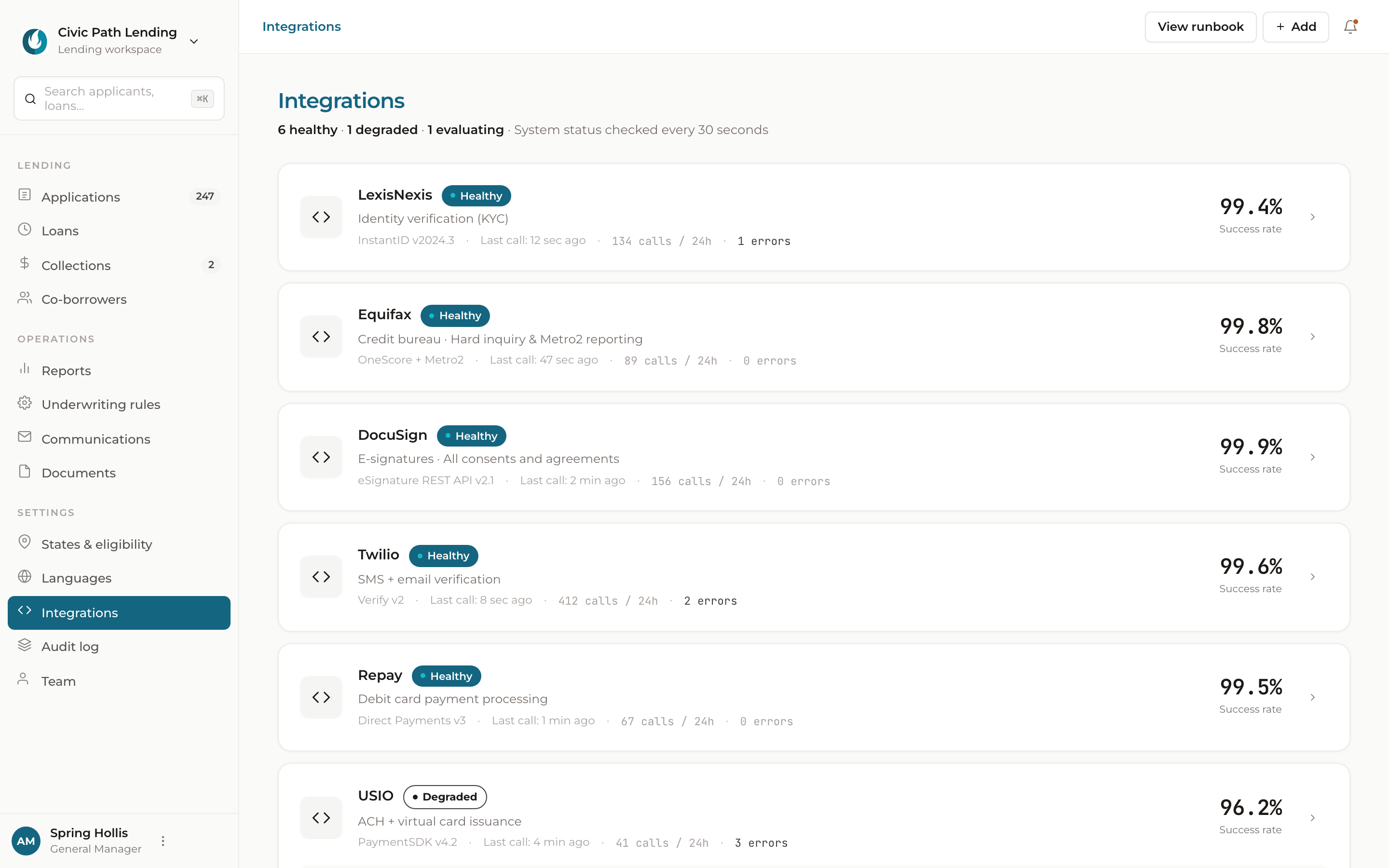
Integration boundaries are already mapped.
Identity, credit, e-signature, SMS, email, ACH, card processing, restricted-card issuing and finance export have adapter seams.
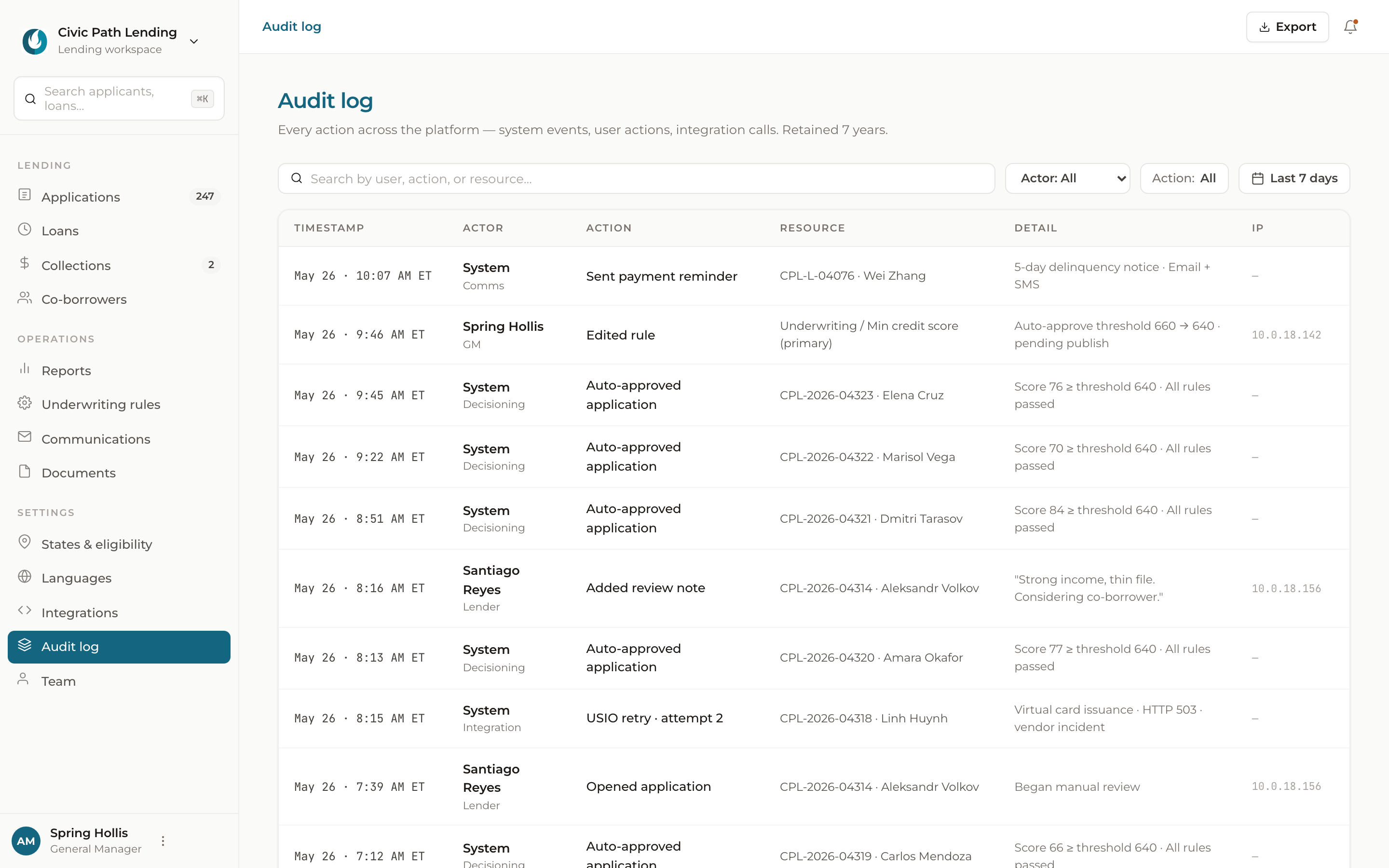
Deployment and operations were built for review.
Workers, schedulers, health checks, audit, restore drills, Docker validation, release packets and Azure evidence gates are present.
One buyer. One environment. One compliance boundary.
The deployment shape is meant for a buyer-controlled environment rather than a shared public SaaS pool.
Transactional data, queues and retained document/evidence storage have distinct deployment responsibilities.
Key Vault, Entra sign-in, scoped sessions, RBAC and backend-enforced access checks are the intended production posture.
Build identity, deploy smoke, validation smoke, restore proof, image proof and watch packets support IT review.
Sell it as implementation-ready infrastructure. Live production still needs buyer credentials, compliance sign-off and vendor certification.
Best fit: a lender, CDFI, credit union, nonprofit, government-fee program or embedded-finance buyer that wants the stack without starting from zero.